What is the difference between a City Mayor and a Regional Mayor?
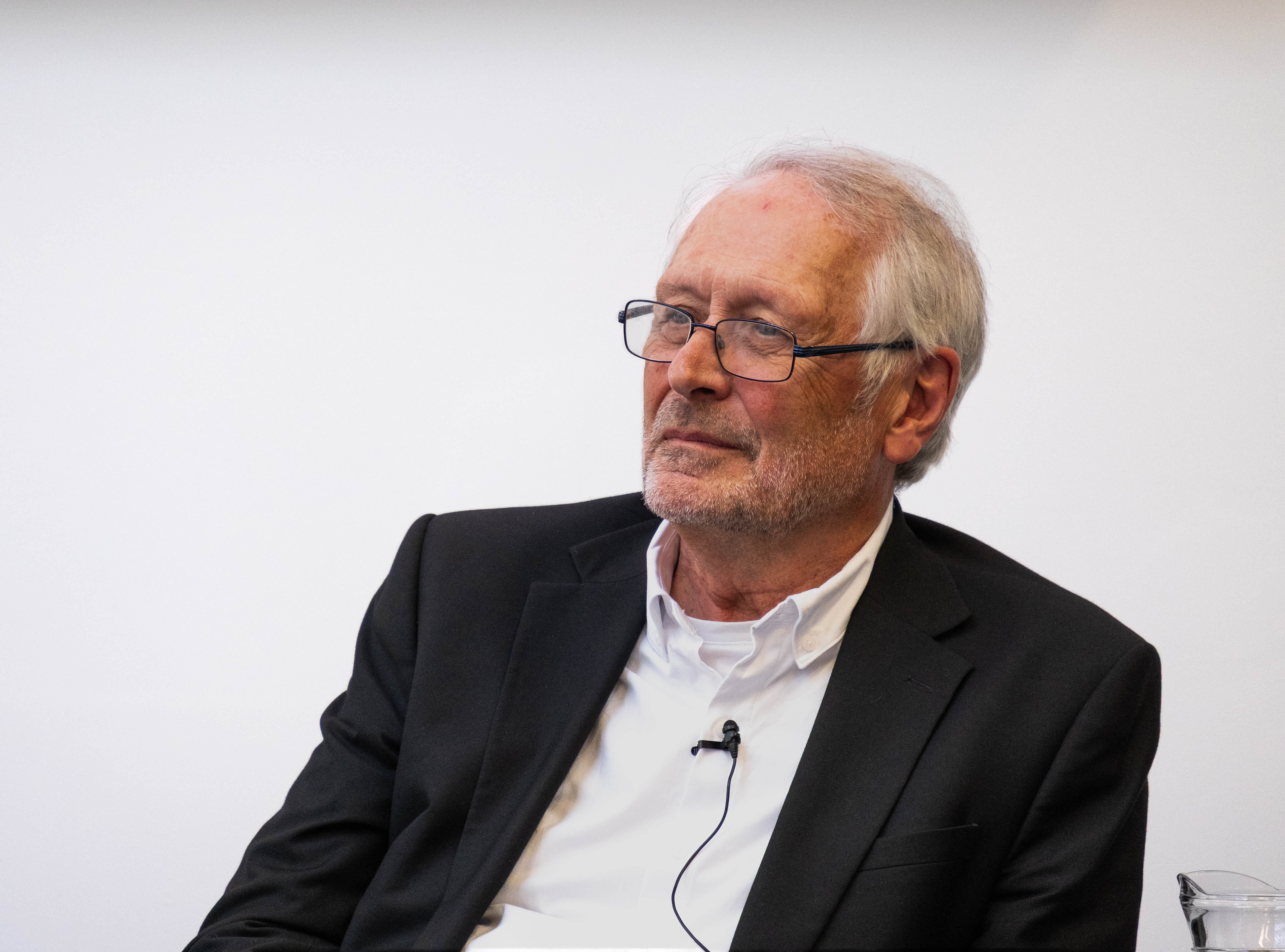
Leicester City Mayor Sir Peter Soulsby (pictured) has announced plans to scrap his own role.
His decision comes as Government moves towards a system of regional mayors operating strategically across local authorities.
Government wants local authorities to be run under leaders selected from within their own parties.
Sir Peter told BBC Leicester politics reporter Dan Martin: "The government has made it very clear that Mayors for single authorities, like Leicester, are something they want to move away from.
"Other cities, like Liverpool and Bristol, have moved away from it and returned to the conventional form of councillors electing a leader.
"Even though LGR has been delayed, we have to get on with making that change."
But what is the difference between the roles of City Mayor and Regional Mayor?
Mayors in summary
A City Mayor is a directly-elected leader of a single local council - as seen with Sir Peter Soulsby in Leicester.
The role of the City Mayor is to lead the council's executive and take responsibility for core council services including local planning, waste collection, housing, libraries, local streets and other functions.
The role is directly elected by voters - unlike with a leader-and-cabinet system in which local councillors select their leader from within the party.
A Regional Mayor is elected to lead strategy across several council areas.
Such areas are typically known as a Mayoral Combined Authority or Mayoral Strategic Authority (MSA). MSAs have powers and funding devolved directly to them from central government.
Regional Mayors are responsible for leading a regional growth partnership. This is designed to take strategic decisions across an area's labour markets, transport networks, investment decisions, and skills agenda. This is why regional strategic assets such as East Midlands Freeport are switching from council to MSA reporting lines.
Regional Mayors are directly elected and typically hold responsibilities over transport, skills, housing and infrastructure - though every settlement is different. There's more information about levels of Devolution below.
The LLR situation
Leicester, Leicestershire and Rutland (LLR) does not currently have a Regional Mayor - or a combined authority.
Talks in the early 2020s about being part of what was ultimately to become the East Midlands County Combined Authority (EMCCA) did not result in agreement.
The region has fallen behind combined authorities in recent years in terms of investment in skills, infrastructure and business support.
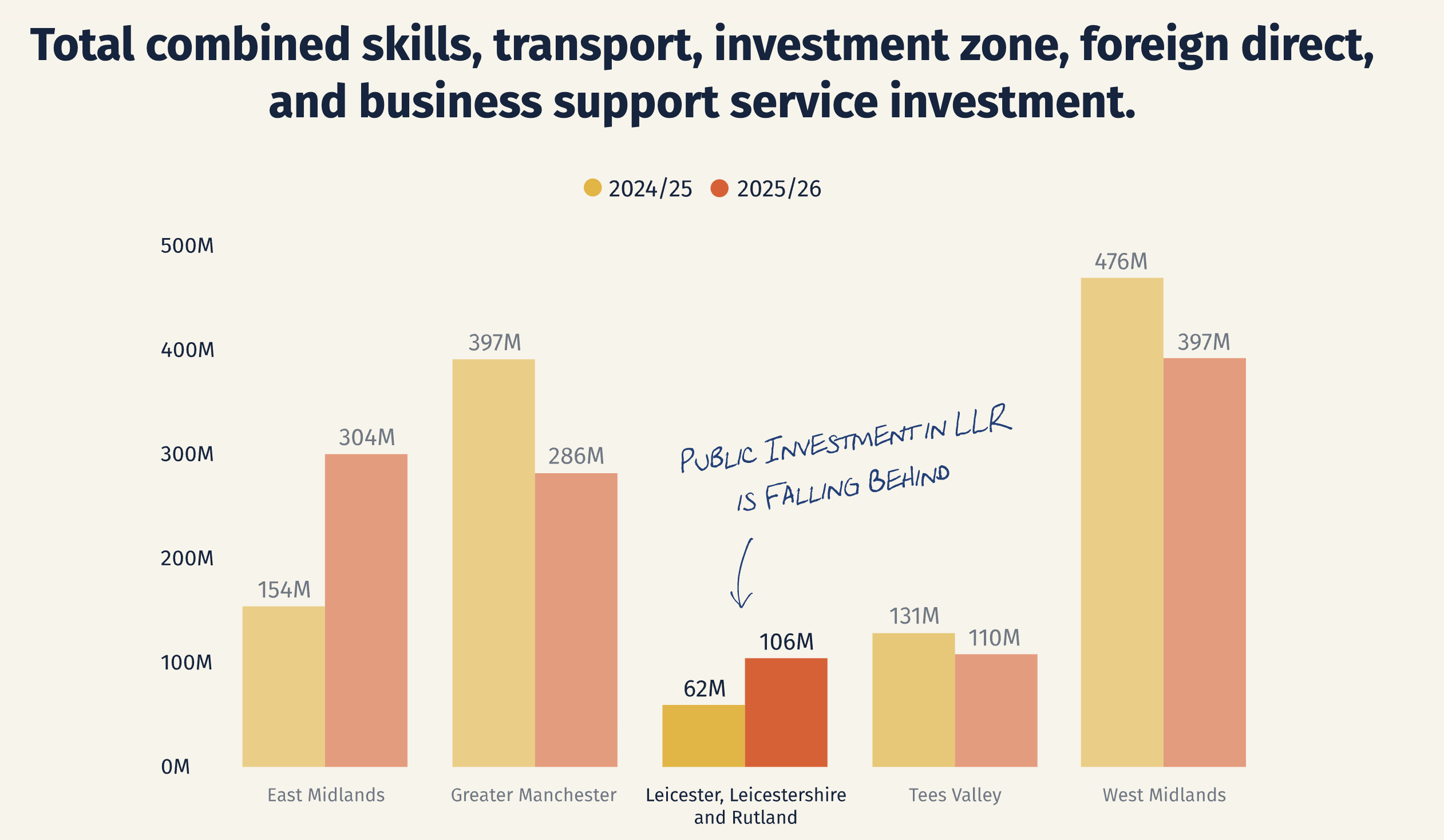
In August 2026, the leaders of 10 local authorities spanning Leicester, Leicestershire and Rutland united to sign a joint letter to Government asking for a Regional Mayor.
The leaders - representing the city, county and district councils - stated their they belief that an MSA “offers the strongest platform for strategic leadership, economic growth, investment and public service reform across a sensible geography”.
They also asked for “further clarity on the anticipated timetable for decision-making and implementation” and for more details about potential funding opportunities and devolved powers.
What Government wants from local authorities
As described by Sir Peter Soulsby, Government wants to return to the model of elected local authority councillors selecting their own leaders.
These authorities would then work together as part of a strategic combined authority overseen by a Regional Mayor who is directly elected by voters.
Prime Minister Andy Burnham has previously said that he would like to see Devolution in areas such as LLR as quickly as possible.
In order to manage the phases of Devolution, Government has introduced a tiered system. The purpose is to move regions through the process in stages - from initially establishing a combined authority through to receiving enhanced regional control over spending and more.
- Level 1 sees local authorities working together across a region (such as through a joint committee)
- Level 2 is a single institution, without a Regional Mayor, operating across a region.
- Level 3 is a single institution with a directly elected mayor, operating across a region.
- Level 4 provides deeper powers for existing Level 3 areas. It is subject to eligibility criteria.
East Midlands County Combined Authority (EMCCA) was awarded Level 4 status soon after Mr Burnham took office. However, Leicester, Leicestershire & Rutland is not part of EMCCA. It failed to reach agreement with Derby, Derbyshire, Nottingham and Nottinghamshire ahead of the 'D2N2' region forming into EMCCA in 2024.
Then leader of Leicestershire County Council, Nick Rushton, warned at the time that being excluded from an East Midlands-wide regional deal would result in Leicestershire “waiting at the back of the pack” for a non-mayoral devolution deal - a deal which is “only slightly better than nothing”.
The situation today is moving at pace. Around 48% of England's population lived in a region with mayoral devolved powers towards the end of Keir Starmer's time as Prime Minister. At time of writing there are 12 areas with mayoral devolution in England: Greater London, West Midlands, Greater Manchester, Liverpool City Region, West Yorkshire, South Yorkshire, Cambridgeshire and Peterborough, Tees Valley, West of England, York and North Yorkshire, East Midlands, and the North East.
The momentum built when former Greater Manchester Regional Mayor, Mr Burnham, took office in July 2026.
What a Regional Mayor is not
A Regional Mayor is not a 'super-council leader' who takes over day-to-day council services (such as waste, libraries, and local planning) across every place in the area.
Those responsibilities will remain under the control of local authorities.
Rather, the Regional Mayor leads on the agreed strategic functions of the region. This means looking at the bigger picture of regional investment, strategic infrastructure, and wider vision for the economic growth of the region. The Regional Mayor is a figurehead to represent the area nationally - as seen when Mr Burnham took office and promptly invited Regional Mayors for a meeting at the new No10 North.
Why having a Regional Mayor matters for LLR
The distinction matters because LLR’s devolution case is not about creating a mayoralty for Leicester alone. It is about creating the leadership and delivery capacity to act on the shared economy of Leicester, Leicestershire and Rutland.
That is why the campaign’s focus is on a single economic vision, transparent collective leadership with a formal business role, a published devolution pathway, and early growth levers - especially skills, transport, business support and housing. A regional mayor could provide the visible, democratically accountable figurehead for that arrangement, while the authority around them provides the mechanism for councils, business and partners to make strategic decisions together.
In short: a City Mayor runs a place; a Regional Mayor helps a group of places compete and grow together.
What a Regional Mayor means to sectors
Devolution Leicestershire hosts guest contributions from leaders across a host of sectors operating in Leicester, Leicestershire & Rutland:
- Andy Reed OBE: 'Why after 30 years this moment is different for Devo'
- Chris Shaw: 'Why Devo matters to our VCSE sector'
- Dr Nik Kotecha OBE DL: 'LLR has already shown it can lead economic renewal'
- Gosia Khrais: 'Look what LLR built without Devo - imagine what we could do with it'
- Sue Tilley: 'Business growth must not become a casualty of Devolution'
- Rob Martin: 'Devo can improve systems for vulnerable children'
- Rory Palmer: 'Devo deal must benefit people and communities'
What Devolution Leicestershire wants
Devolution Leicestershire is an industry-education-VCSE coalition. Founded in 2026, our purpose is:
- To accelerate an effective Devolution deal for Leicester, Leicestershire & Rutland
- To press for fair Government funding for LLR while the Devo deal is done.
We have four core asks to move the Devolution agenda forward for Leicester, Leicestershire and Rutland:
- Speak with a single voice. Agree and publicly champion one unified economic vision for our region. Advance clear evidence on sector strengths, skills gaps and growth opportunities.
- Show collective leadership. Create a transparent governance model that enables decisions at pace. Ensure business, education, and VCSE has a formal role in decision-making.
- Set a clear Devo pathway. Publish a roadmap for strategic devolution, with defined milestones, timescales and responsibilities. Engage immediately with Government to agree a pathway to a deal.
- Prioritise key growth levers. Focus now on a Local Growth Plan for skills, transport, business support, housing and net zero - the areas where funding settlements show devolved regions are pulling ahead.
Who we are
Devolution Leicestershire is an industry-education-VCSE coalition.
Founded in 2026, its purpose is:
- To accelerate a Devolution deal for Leicester, Leicestershire & Rutland
- To press for fair Government funding for LLR while the Devo deal is done.

George Oliver is a Non-Executive Director at East Midlands Chamber, an Ambassador for Leicestershire Business Voice and the Chair of Charity Link. He is Entrepreneur-in-Residence at the University of Leicester. George is the Managing Director of 1284 Communications and a former Editor of the Leicester Mercury.