Comment: ‘Will Devo support a rejuvenated regional media?’
Credit:
Will Johnston

Last week the Financial Times ran an editorial that caught the eye - and which offered a fresh perspective on the Devo opportunity.
Until reading it, I’d typically considered Devolution largely through the lens of economic opportunity.
The FT framed it instead as a potential lifeline for local government reporting.
As someone who spent many years doing a lot of local government reporting, that got me thinking about Devo differently.
For a couple of years now I've been talking with local MPs about the societal risk of local government and court reporting being lost.
The impact of that is not just the transparency issue, there’s also the long-standing deterrent effect of wrongdoing ending up in court - and from there the local paper.
The FT's argument - in its leader column headlined ‘Burnham's Devolution project needs strong local media too’ - is simple.
Its author argued that you can’t hand more power to regional mayors and combined authorities then expect it to be used entirely accountably if there's no one left to follow and report on what happens next.
The FT reports that the UK had more than 1,600 local daily and weekly papers in the 1980s.
By 2022, the three publishers which today dominate local news employed around 3,000 journalists between them - down from 9,000 in 2007.
Concerningly, one in 10 council areas - covering 4.4 million people - now sit in what the Public Interest News Foundation calls "news deserts".
This is where there is no dedicated local media outlet at all.
I saw a section of that play out. Before founding 1284 Communications, I was a journalist, ultimately serving as Editor of the Leicester Mercury from 2016 to 2020.
I worked in regional media through the period identified by the FT.
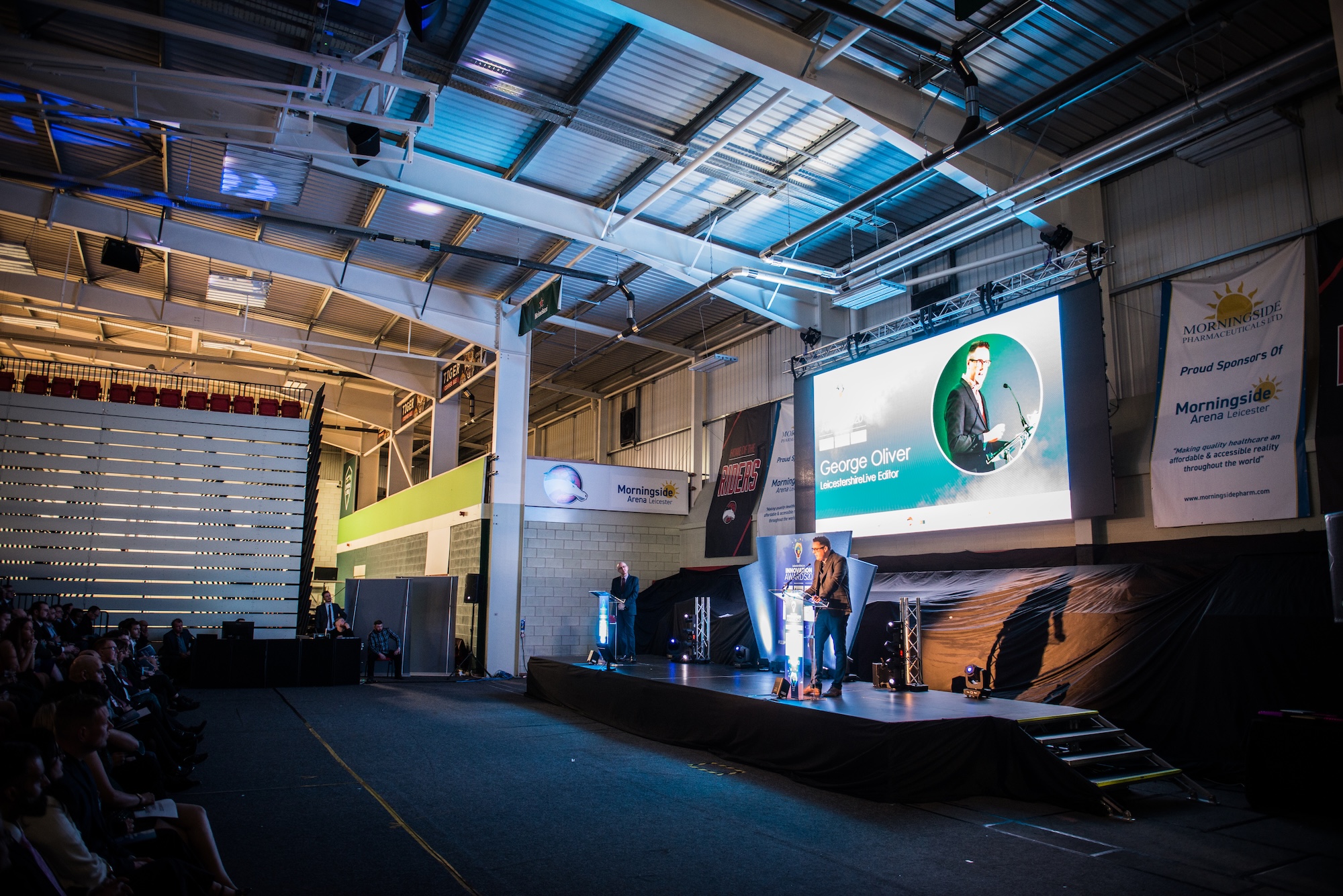
Back then, there was still scope for local media leadership in regional growth projects - the picture shows me at the Leicestershire Innovation Awards I co-founded with Dr Nik Kotecha and which eventually became part of the LLEP’s regional innovation agenda.
But the trading environment in 2026 is a lot tougher for our local journalists.
Building awareness of Devolution Leicestershire
It was against this backdrop that 1284 was commissioned to run this website earlier this year - and it informed how we developed the news section in the way we did.
Many campaign websites treat content as something to protect and control: exclusive quotes, embargoed lines, a press office gatekeeping access.
We did the opposite.
We designed the site so that every piece of sector commentary published - ranging from analysis from business leaders to policy specialists, nonprofits to innovators - was open to regional journalists. A tailored LLR Devo news wire, if you will.
It means we are creating a library of local experts talking about what Devolution actually means for skills, transport, housing and business support in Leicester, Leicestershire and Rutland. A library there for any local journalist to draw on, quote from, with no pitch process, no exclusivity, no sign off, no charge.
And it's working brilliantly. Weekly, we are seeing snippets of Devo LLR articles and columns from local industry leaders appearing in regional media articles, interviews and columns about the Devo imperative for Leicester, Leicestershire and Rutland.
By providing a trusted and quality source of information, this campaign is supporting newsroom efficiency by linking stretched local journalists with local experts who know their subject. And the content is ready and waiting for when the reporters need it.
As a campaign, it has also improved efficiency for us. Instead of pitching stories in to media and hoping something sticks, we're focused on making sure the commentary supply is good enough that journalists seek it out. And they are.
Funding the model
Of course, such a model does not come free (usually).
As the FT article correctly observes, it costs money to produce professional journalism. But, as we have seen, the traditional model is not as robust as it was in its heyday.
We are fortunate that East Midlands Chamber backed a Devolution campaign and funded us to deliver it. It's why the Chamber is identified on the site footer.
One solution that has been discussed over the years is through a US-style model of philanthropic funding of journalism. Of course this leads to accusations of political bias - but that is levelled at corporate-owned newrooms too.
Some of the big US tech companies fund local reporting initiatives through grants or philanthropic programmes. For example, Facebook’s own move into funding of UK community journalism in the late 2010s was actually launched at the King Power Stadium in Leicester.
The Community News Project created a role at the Leicester Mercury for Asha Patel, who subsequently went on to be an excellent reporter for the BBC.
Then there is also the BBC itself. Its Local Democracy Reporting Service (LDRS) funds 165 journalists to prepare public-interest reporting from within the newsrooms of local organisations. Amy Orton was one of them.
It’s active in LLR and its reporters have been drawing from our interviews in their coverage of Devolution.
However - as is widely known - the BBC’s own funding is also severely squeezed.
The FT wraps up with a call to action for our Devo-focussed Prime Minister: “The Starmer government launched a local media action plan earlier this year including £12mn of grant funding over two years.
“But Burnham wants to go much further with his version of devolution.
“If he is committed to regenerating local governments and communities, reviving local media has to be part of his strategy too.”
And for us? If business-backed campaigns like ours want local scrutiny and local accountability to keep pace with local power, we can't just complain that the press has shrunk - we need to make it easier for the journalists that remain to do their job.
It benefits everyone: a story a local journalist has written in their own words, using our specialists' thinking, travels further and lands more credibly than anything we publish ourselves.
Who we are
Devolution Leicestershire is an industry-education-VCSE coalition.
Founded in 2026, its purpose is:
- To accelerate a Devolution deal for Leicester, Leicestershire & Rutland
- To press for fair Government funding for LLR while the Devo deal is done.

George Oliver is a Non-Executive Director at East Midlands Chamber, an Ambassador for Leicestershire Business Voice and the Chair of Charity Link. He is Entrepreneur-in-Residence at the University of Leicester. George is the Managing Director of 1284 Communications and a former Editor of the Leicester Mercury.