Comment: 'SMEs see customers, suppliers, opportunities - not administrative boundaries'
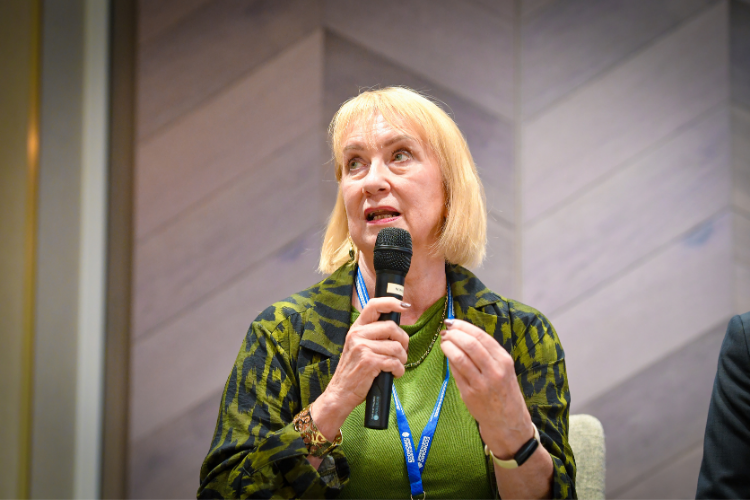

I recently joined a round table at Loughborough University with Tom Adeyoola - the Executive Chair of Innovate UK - and representatives from universities, industry, combined authorities and the wider innovation community.
It was a valuable opportunity to hear Tom’s vision and bring a Leicester, Leicestershire & Rutland business perspective to the discussion.
Having started my career running an SME, I understand the challenges of growing a business and navigating support.
My work in economic development included MIT REAP, our region's Innovation Board and the Leicester and Leicestershire Innovation Festival.
My starting point was simple: we have no shortage of innovation.
We have ambitious businesses, three universities, major science and technology assets, global companies and a diverse economy.
The question is whether emerging structures will help those assets realise their potential.
Operating outside a Mayoral Strategic Authority
Leicester, Leicestershire and Rutland (LLR) currently sits outside a Mayoral Strategic Authority, while neighbouring areas increasingly have devolved powers and resources.
My concern is not simply about governance. It is whether our businesses, universities and innovation assets can participate on an equal footing.
Uncertainty about future structures must not delay economic investment. After all, the ongoing Local Government Reorganisation and Devolution are different processes.
Businesses do not stop innovating while governance arrangements are resolved, nor should economic policy.
We must be at the table when investment programmes are designed, priorities discussed and collaboration opportunities developed.
Innovation must reach SMEs
We rightly focus on high-growth companies, scale-ups and breakthrough technologies. But what are we doing for the 98%?
Most of our businesses are SMEs. For them, innovation might mean adopting AI, automating production, digitising operations, introducing a product or entering a new supply chain.
These changes may appear modest individually, but their collective contribution to productivity and growth could be enormous.
Adoption matters just as much as invention. Innovation must reach real businesses, where it can create jobs, attract investment and generate economic value.
Tom’s emphasis on reducing friction resonated strongly.
Smaller businesses rarely have dedicated teams to navigate funding programmes and institutional structures. They need straightforward support and stronger connections with universities, investors and regional partners.
I also shared a business’s suggestion: identify companies interested in innovation and collaboration, even when they do not fit a particular programme. Those connections should not disappear when a funding application ends.
Collaboration must cross boundaries
Businesses see customers, suppliers, skills and opportunities. They don't see administrative boundaries.
Supply chains, commuting patterns and university partnerships already cross those boundaries.
Leicester and Leicestershire has strong Midlands relationships. Loughborough University, for example, is outside the East Midlands Combined County Authority area but already works with EMCCA on innovation.
Funding and governance should recognise these economic relationships.
Devolution should strengthen collaboration, not fragment it or introduce barriers where partnerships already work.
For our area, remaining connected to Midlands opportunities must go alongside a fair chance to influence and benefit from investment.
Being outside an administrative structure must not mean being outside economic opportunity.
Bringing the business voice together
Independent business organisations have an important role. Leicestershire Business Voice cannot deliver every programme, but we can convene businesses and universities, share intelligence, identify barriers and connect people.
We can also help re-engage businesses that feel frustrated or disconnected from support.
I left encouraged by the willingness to collaborate, but convinced that Leicester and Leicestershire must continue making its case confidently.
We have the businesses, universities, assets, relationships and ambition.
Now we must ensure administrative geography does not determine opportunity, and innovation reaches both tomorrow’s industry leaders and the thousands of SMEs whose collective growth will shape our prosperity.
Who we are
Devolution Leicestershire is an industry-education-VCSE coalition.
Founded in 2026, its purpose is:
- To accelerate a Devolution deal for Leicester, Leicestershire & Rutland
- To press for fair Government funding for LLR while the Devo deal is done.

Sue is Chair of Leicestershire Business Voice. She is the Founder and Director of Sue Tilley Associates and a member of the board of trustees at the Leicestershire Education Business Company. She was previously Head of Inward Investment, Economic Strategy Manager – Business, Head of Business, Innovation and Partnerships, and Head of the Leicester and Leicestershire Enterprise Partnership (LLEP). Prior to that, Sue was Head of Inward Investment at Prospect Leicestershire, and worked as a sales director, business development director and general manager. She was Owner and Managing Director of the Classy Rags clothing company.