Comment: 'Partnerships are essential for turning Devo ambition into growth'

Devolution offers an opportunity for local leaders to shape priorities around Leicester, Leicestershire and Rutland’s needs - but stronger partnerships will be essential to turn ambition into growth.
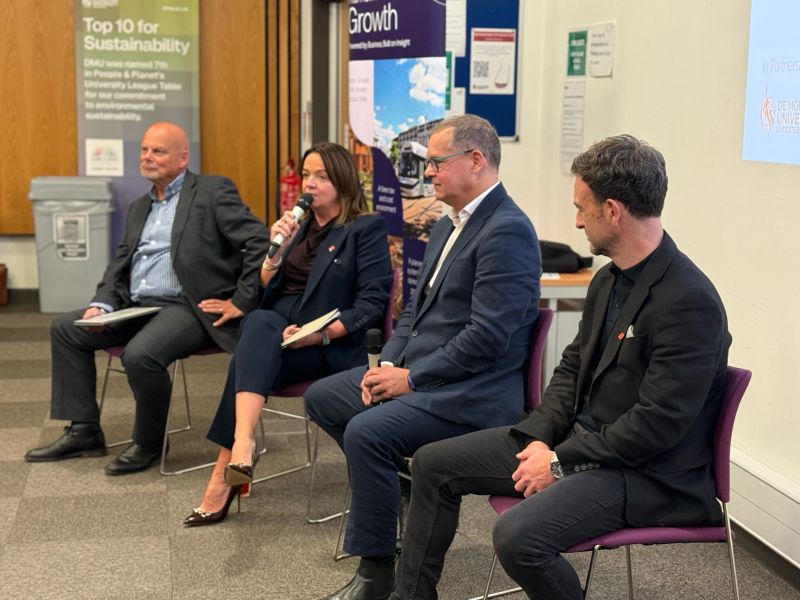
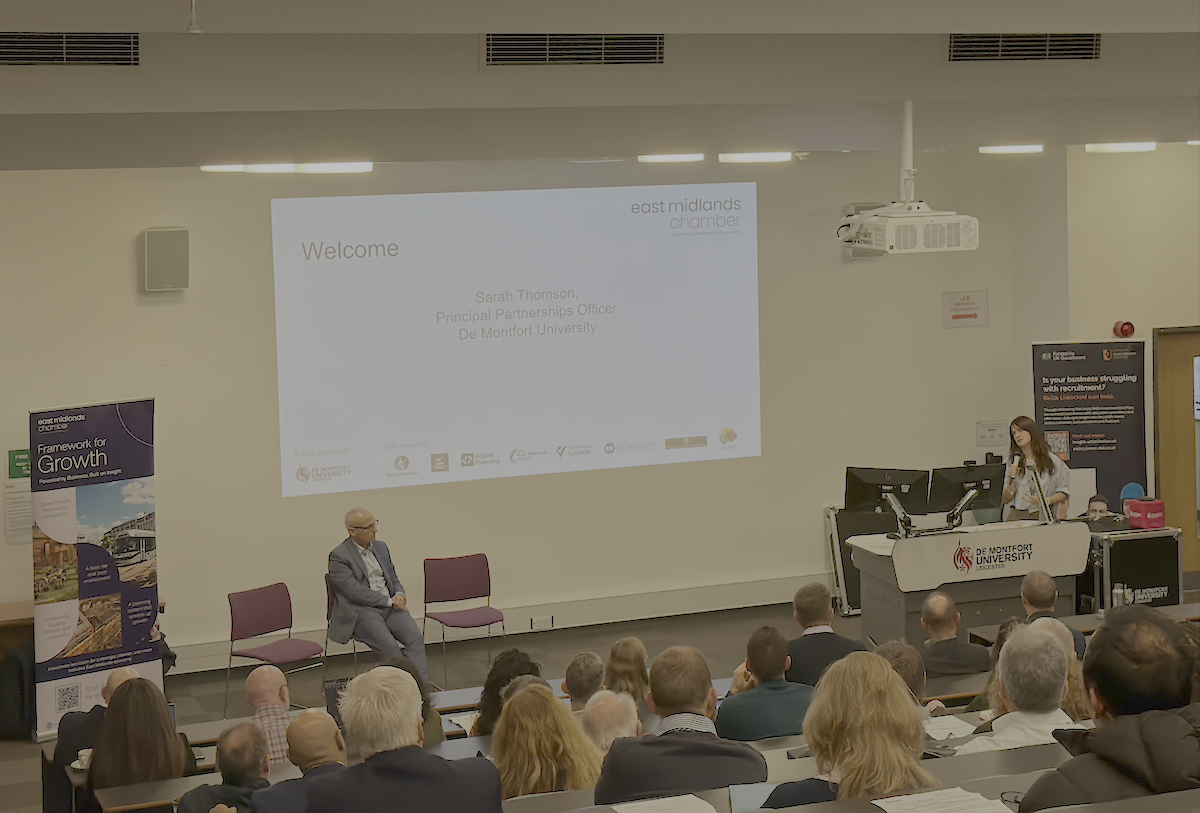
That was the message from Sarah Thomson, Principal Partnerships Officer at De Montfort University, speaking at East Midlands Chamber’s State of the Economy Conference.
Welcoming business leaders to DMU’s Hugh Aston building in Leicester, she challenged the region to be clearer about its strengths, make university expertise easier to access and connect investment with opportunities for local people.
“We talked a little bit about devolution already. I’m sure it’s going to come up a lot more in the conversations today,” she said.
“And I think this is a chance for local leadership to start shaping the priorities around our own issues.”
Working across boundaries
Sarah said that, as Devolution develops, collaboration across the East Midlands must remain a priority.
Businesses, workers, students and supply chains already cross local boundaries, she noted. Growth in one part of the region can create opportunities elsewhere.
“Our economy doesn’t stop at the edges of either authority,” Sarah said.
“Businesses will trade across them, people travel across them for work and education, investment ideas and supply chains move across them.”
She called on universities, the Chamber, businesses and public leaders to keep building relationships -understanding what makes each place distinctive and identifying where collaboration could make them stronger.
Making universities easier to access
Sarah described universities as significant economic assets, bringing together skills, research, specialist expertise, facilities and international networks.
But she warned that simply having them did not guarantee that businesses and communities would benefit.
“It’s a bit like owning a state of the art computer and using it to only write letters,” she said.
“The capability is there, but unless we understand what it can do and you can connect that capability to real need, you’re only using a small part of its potential.”
Sarah acknowledged that businesses could find working with universities complicated, with unfamiliar language, different processes and several possible routes into an institution.
The task for universities was to make that first conversation easier: listen to the business challenge, find the right expertise and explain what a useful partnership could look like.
Academics also needed support to understand the questions businesses were asking and how their research could contribute to investment, innovation and growth.
A clearer case for investment
Sarah also challenged the region to describe more clearly what it wanted to be known for.
She pointed to other places building recognisable economic stories around their strengths, including financial and professional services in Leeds, advanced manufacturing in Sheffield, and science and technology in Cambridge.
“Why would a business choose to invest here, grow here or bring its challenges here?” she asked the audience.
“What capabilities can we build on and what evidence tells us that we’re actually backing the right opportunities?”
This meant identifying where local strengths met genuine opportunities - and aligning resources behind them.
Connecting growth with opportunity
Sarah said growth must also help more people access education and develop the skills employers need.
That required routes into learning at different stages of life, closer working between schools, colleges, employers and communities, and action to remove barriers to progression.
She urged delegates to consider the choices behind their ambitions: what they might need to do less of, and what evidence would show they were making the right decisions.
“Our opportunities [are] to connect those strengths deliberately, to make partnership amongst ourselves easier, to help more people to access those education and skills they desperately need and to focus our efforts where they can make the greatest difference,” she said.
“If we do that together, I think success for one part of the East Midlands can help create success for us all.”
Who we are
Devolution Leicestershire is an industry-education-VCSE coalition.
Founded in 2026, its purpose is:
- To accelerate a Devolution deal for Leicester, Leicestershire & Rutland
- To press for fair Government funding for LLR while the Devo deal is done.

George Oliver is a Non-Executive Director at East Midlands Chamber, an Ambassador for Leicestershire Business Voice and the Chair of Charity Link. He is Entrepreneur-in-Residence at the University of Leicester. George is the Managing Director of 1284 Communications and a former Editor of the Leicester Mercury.