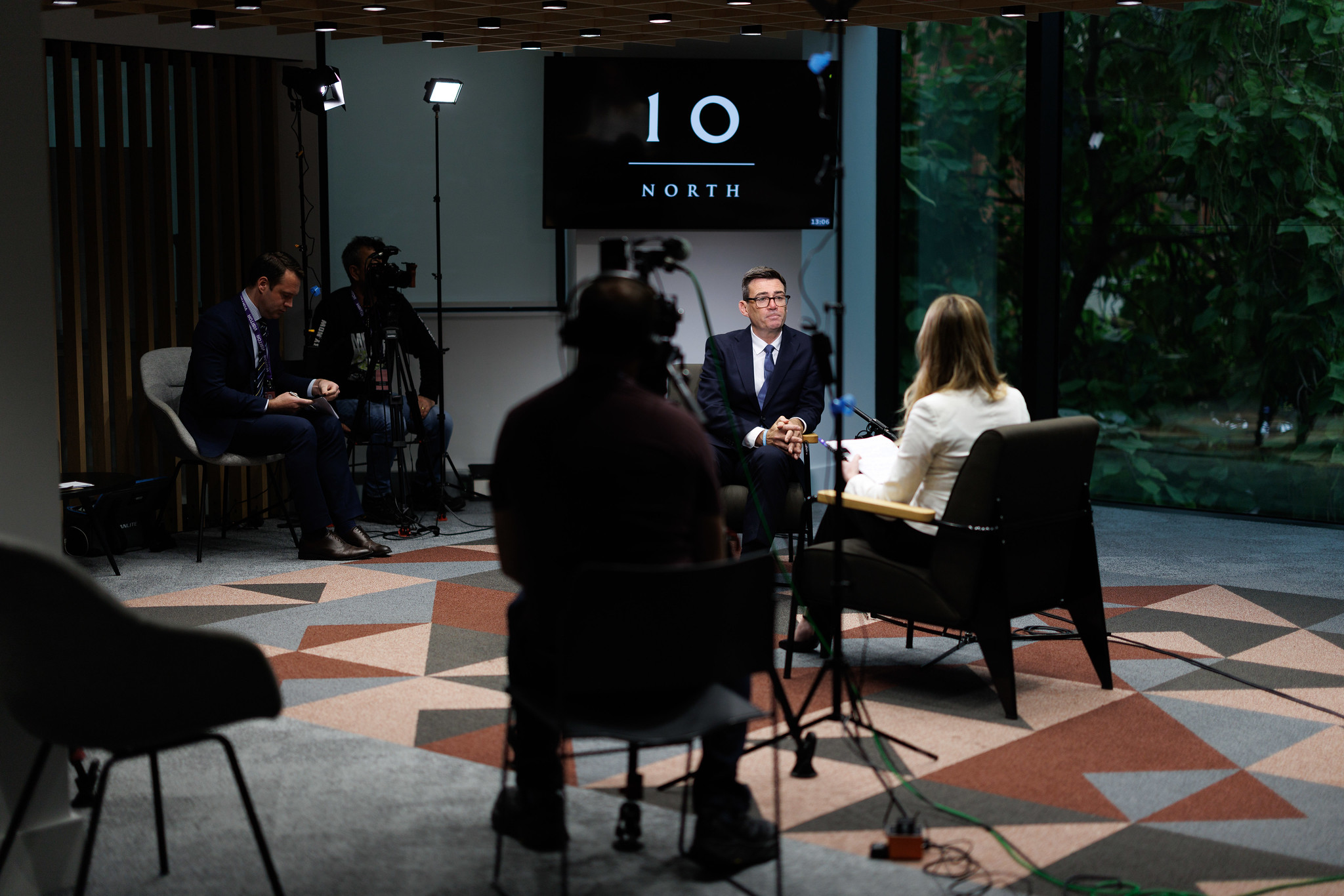
Comment: 'Devolution delay is hampering business'

Credit:
Beth Walsh Photography
The system of governance for our towns, cities and regions is changing.
The emergence of Mayoral Combined Authorities around the UK is shifting how funding is allocated. Nowhere is this more evident than in Leicester, Leicestershire, and Rutland.
To its north, the East Midlands Combined County Authority (EMCCA) formed in February 2024. Mayor Clare Ward was elected three months later and now represents 2.2 million people across the region.
But no such authority exists in Leicester, Leicestershire, and Rutland. There are various reasons for this, but increasingly the question being posed is what delaying devolution means for businesses and communities in the region.
As seen in combined authority areas, with devolved status comes the luxury of Government access for the elected mayor. It also means regional decision-making powers over issues including transport, skills and employment and infrastructure. It brings direct dialogue with Number 10 and firmer links with Government departments.
Devolved status is also reflected in funding settlements - and there’s currently a stark difference in investment being allocated to devolved and non-devolved areas. East Midlands Chamber analysis reveals that - compared with devolved areas - LLR is consistently losing out. Data shown in our table shows some of the disparities that exist between funding received (or not received in some cases) in LLR, compared to money being distributed to neighbouring areas with established Mayoral Combined Authorities.
While some of the reasoning behind this could be historical - Leicestershire County Council has long maintained that it is the lowest funded council in the country - the figures suggest LLR is falling behind.
Of course, it’s not just the amounts of money transferred from Whitehall, but the length of settlements too. Planning for long-term investment and projects becomes almost impossible when allocations are decided from one year to the next. Multi-year integrated settlements - such as those handed down to Mayor-led authorities - make longer term planning simpler. Localised funding packages become easier to allocate, implement, and communicate.
It’s important to draw the distinction between Devolution and Local Government Reorganisation (LGR). In terms of devolution, LLR has lodged an expression of interest with Government to be part of its priority programme. But the reality is that other regions are further along the route to devolution than LLR - and have still seen their legislative and parliamentary approvals paused. Therefore, it’s unlikely that LLR-based voters will be heading to the polls any time soon to elect their first regional Mayor.
2028 has been mooted as a potential date for change - but lots involved in the process see this as an optimistic estimate. This is, in part, down to the fact that Local Government Reorganisation is viewed in some LLR council and government quarters as a pre-requisite to Devolution.
LGR - and, again, this is distinct from Devolution - is currently under public consultation after three different proposals were submitted to Government as to how it might replace LLR’s existing two-tier system with one or more single-tier authorities. The consultation closes in May.
For business, the situation poses several questions: How do we close the funding gap between now and the creation of a combined authority? When is it likely to happen? How do we ensure LLR doesn’t fall further behind in the meantime?
Recent developments have seen some regions on the MHLCG’s Devo waiting list being asked by Government to express an interest in Foundation Devolution status. A Foundation Strategic Authority, according to gov.uk is ‘a legally recognised Strategic Authority without a mayor’. It is how all established combined authorities started off. The English Devolution White Paper and the Devolution Framework say that foundation devolution status is ‘explicitly positioned as a stepping stone toward deeper (usually mayoral) devolution, rather than an end state’.
It all suggests that the mayoral ballot boxes won’t be out in LLR for a while yet - but that some of the mechanisms attached to securing funding and changes in the ways local decisions are made are being put in place behind the scenes. It’s a sort of watered down Devolution. An interim fix.
But it’s not official yet. And it means there’s still no public timeline for when devolved investment will start flowing into Leicester, Leicestershire, and Rutland in the way it is to neighbouring areas.
- This article was originally published in the April 2026 edition of Business Network magazine.
Who we are
Devolution Leicestershire is an industry-education-VCSE coalition.
Founded in 2026, its purpose is:
- To accelerate a Devolution deal for Leicester, Leicestershire & Rutland
- To press for fair Government funding for LLR while the Devo deal is done.

Amy Orton is Account Director for 1284 Communications. She is a board member at Menphys. Amy was previously the Local Democracy Reporter for Leicestershire. Her role was funded by the BBC to report on local government in LLR for shared use by a host of media titles.